 Brain Model
Is Rumination a Disorder – or Normal Brain Function?
Rumination appears in the context of depression, anxiety, grief, and burnout. The same circuits – the subgenual ACC, the mPFC, the hippocampus, the amygdala – are involved in all of these. This overlap leads many people to wonder whether their own rumination is a symptom of something clinical. The anatomical answer is: the circuits are the same; the parameters differ. And there is a third reading that is worth knowing.

Anatomically and biochemically
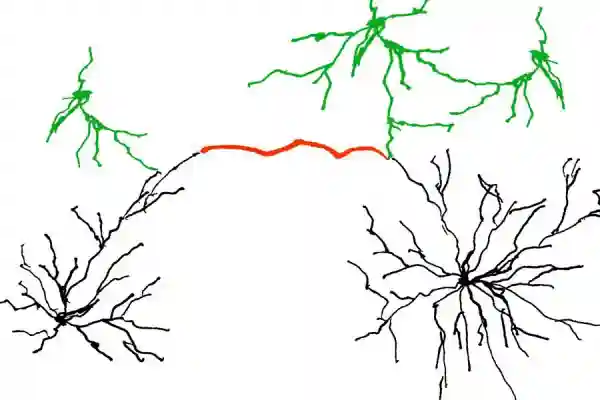
The rumination circuit involves the mPFC (self-reference), the subgenual anterior cingulate cortex (sgACC) (negative self-evaluation), the ACC (open-loop maintenance), the hippocampus (episode supply), and the amygdala (emotional salience). In the healthy brain, the vmPFC eventually adds new context, the emotional valence of the episode shifts, replay frequency decreases, and the episode integrates. The circuit resolves – not instantly, but over time.
Depression. The sgACC is consistently hyperactive in depressive rumination – so much so that it has been a target of deep brain stimulation in treatment-resistant depression. In depression, the vmPFC's regulatory capacity over the amygdala and sgACC is reduced. The resolution circuit – new context reaching vmPFC, shifting emotional valence, decreasing replay – does not function reliably. Rumination does not decrease with time; it may intensify. This is a circuit operating at impaired baseline parameters, not a different circuit. The same structure, dysregulated. The wider pattern that surrounds it – sustained low mood, reduced reward anticipation, sleep disruption, energy reduction – is what depression actually looks like. Rumination alone does not indicate it.
Anxiety. In anxiety disorders, the amygdala's threat-evaluation threshold is lower than in the healthy brain: more situations are flagged as threatening, and the emotional salience tag applied to memories is accordingly stronger. This means that episodic memories in anxious rumination carry a higher amygdala charge, which makes the open-loop more persistent and suppression more difficult. Past-oriented rumination and future-oriented worry share the same ACC mechanism and frequently co-occur. But the anxious amygdala's lower threshold is a parameter shift, not a structural change.
Grief. Grief is not a disorder. It is the healthy brain processing a significant loss through the same autobiographical memory system. The hippocampus supplies memories of the lost person or situation; the amygdala tags them with high emotional valence; the mPFC engages in sustained self-referential processing; the vmPFC gradually forms new associations around the absence. This process takes time measured in months, not weeks. The distinction between grief and clinical depression – which can co-occur – is that in healthy grief the vmPFC-integration process, while slow, is progressing: replay frequency gradually decreases, new life context accumulates, and the episodes eventually integrate into the broader autobiographical narrative.
The clinical indicator that points toward professional attention is not the frequency of rumination alone. It is rumination that does not decrease in frequency over months, that intensifies rather than diminishes, and that is accompanied by other signs: sustained low mood, reduced ability to find engagement or pleasure, sleep disruption, or significant functional impairment. For professionals who encounter these patterns in themselves or colleagues, the skool.com/supervision community provides a context to work through these circuit-level understandings in relation to everyday professional experience.
What if rumination is an over-fulfilling competence?
There is a third way to read the question. The framework of Competence Hyperdominance, developed by Johannes Faupel, proposes that many mental health patterns are not deficits. They are genuine human strengths running at a level that is currently too high for the situation. Not a broken thermostat – a correctly functioning one set a few degrees too warm.
Three real competences show up inside the rumination pattern.
Sense-making and meaning-finding. The brain's drive to understand what happened, why it happened, and what it means is a genuine strength. It is the same capacity that enables learning, professional growth, and the integration of experience into wisdom. In rumination, this competence is searching for a resolution that the unchangeable past cannot provide through replay alone. The sense-making is real; its direction needs to shift from the fixed event to a broader context.
Error-detection and learning. Reviewing past actions in order to improve future ones is a genuine adaptive function – one that is particularly well-developed in people who care about quality and professional standards. In rumination, this competence is running without its usual output: the review never reaches a corrective action because the event is over and unalterable. The competence is working; its application has run past the point where it is productive.
Self-awareness. Being aware of one's own role in situations, one's impact on others, and the gap between intention and outcome is a core interpersonal and professional competence. In rumination, this self-awareness is focused intensely on a single episode rather than integrating across a broader pattern. The awareness is accurate; its current scope is too narrow to produce integration.
None of these competences needs to be removed or treated. Each is worth keeping. The question worth sitting with is not "what is wrong with me?" but rather: which of these is currently set a half-turn too high, and what would bring it back into the range where it produces the output it was built for?
Everyday examples
- The professional who has replayed one conversation for four months: In the first weeks, this was sense-making. At four months, with the same emotional charge intact and no decrease in frequency, and alongside persistent low mood and disrupted sleep, the pattern has moved beyond what self-management alone can address. The combination of symptoms – not the rumination alone – is the signal.
- The manager who ruminates specifically about professional mistakes: The same manager who spots problems early, holds high standards, and gives precise feedback. The error-detection competence that makes them effective also runs after hours, reviewing the one moment in the month that did not go well. The competence is genuinely present. Its dial is turned past the point where it produces new information.
- The team lead who grieves a colleague's departure: Six weeks of recurring memories, emotional weight, and reduced energy. This is the normal grief circuit at work. The memories are gradually changing – the emotional charge is slowly different from one month to the next. The circuit is integrating. This is not pathological; it is the vmPFC doing its slow work.
What this page does not say
This page does not diagnose any reader's rumination as clinical or non-clinical. It describes the anatomical overlap between healthy-brain rumination and the circuits involved in depression, anxiety, and grief – and it distinguishes overlap from equivalence. If rumination is persistent and intensifying over months, and is accompanied by mood disturbance, sleep disruption, or functional impairment, please consult a licensed professional. That is not a disclaimer for legal purposes. It is the honest boundary of what a healthy-brain educational resource can usefully offer.
Frequently asked questions
Is rumination a symptom of depression?
Rumination is a recognised feature and maintaining mechanism of depression. In depression, the sgACC is hyperactive and vmPFC regulatory capacity is reduced, preventing the integration circuit from functioning reliably. The loop does not decrease in frequency; it may intensify. Rumination alone does not indicate depression; the wider pattern – sustained low mood, reduced energy, sleep disruption, impaired function – does.
Is rumination a mental illness?
Rumination is not a diagnosable mental illness. It is a normal brain mechanism that also appears as a feature of several clinical conditions. In a healthy brain, rumination gradually decreases as new context integrates the episode. The clinical concern arises when it persists without integration over months, increases in frequency, and accompanies other signs of mood disturbance or functional impairment.
Is rumination normal?
Yes. Revisiting past events, especially emotionally significant ones, is a normal function of the autobiographical memory system. The ACC maintains open loops; the hippocampus re-supplies unresolved episodes; the amygdala prioritises emotionally tagged content. Every healthy brain does this. The pattern becomes a concern not because it occurs, but because it persists without decreasing and without the vmPFC-mediated integration that gradually resolves it in the healthy brain.
Search interest in this topic
Global monthly search volume – "is rumination a symptom of depression": {{AHREFS_VOLUME}}
Global monthly search volume – "is rumination normal": {{AHREFS_VOLUME_2}}
Global monthly search volume – "is rumination a mental illness": {{AHREFS_VOLUME_3}}
Co-occurring terms in top-ranking content: {{COOCCURRENCE_TERMS}}
These are estimates of observed search behaviour, not clinical prevalence data.