 Brain Model
Map 20 – Loyalty Conflict
What happens in the brain when two loyalties demand simultaneously and mutually exclude each other
Anatomically and biochemically
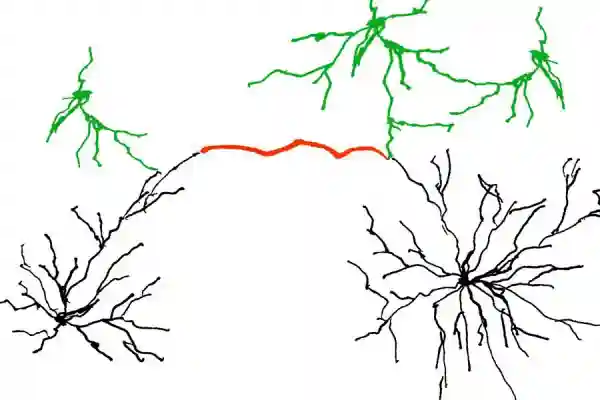
A loyalty conflict arises when two simultaneously active attachment systems send incompatible signals. The orbitofrontal cortex (OFC; attachment evaluation and value calculation) processes both attachments as significant – and calculates that loyalty to one attachment excludes loyalty to the other. This is neurobiologically a dilemma: both systems deliver genuine attachment signals, both losses are real.
The temporoparietal junction (TPJ; perspective calculation) alternately calculates the perspectives of both parties: what does this decision mean for person A? For person B? The more vivid these perspectives, the more intense the feeling of being torn. The amygdala rates both sides as a threat. The anterior insula delivers the physical torn signal: a tightness, a pressure coming from two sides at once.
Why is the decision in a loyalty conflict so exhausting? Because the dlPFC finds no loss-free option. Every decision means a genuine attachment loss – not a weighing of options with different advantages, but a weighing of two different losses. Why does conversation with those involved help resolve it? Because the TPJ can calculate a more complete perspective with more context information. The OFC receives broader material for the value calculation.
Examples from everyday life
- Child and parents on different sides: Both attachments are real. The decision for one side means loss on the other.
- Team and manager in conflict: Loyalty to the team and loyalty to the institution collide. The ACC is active in both directions.
- Friendship and profession: A friend asks for something that conflicts with professional obligations. Both systems are active.
- Transition moment: When one attachment changes, the OFC loses its current calculation. The loyalty conflict intensifies briefly.
- Communication as relief: Conversation with both parties gives the TPJ context. Perspectives become more complete, the torn pressure decreases.
What this card does not say
This card describes a normal mechanism in the healthy human brain. Loyalty conflicts are not a character weakness. This card is not a diagnostic tool and not a treatment guide.