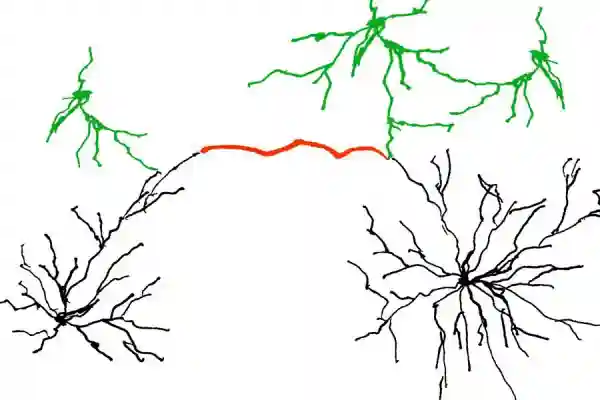
 Brain Model
Map 17 – Waiting for Recognition
What the brain does when external validation does not arrive – and how the reward system becomes permanently calibrated
Anatomically and biochemically
Waiting for recognition (hypernym: external validation, social confirmation, appreciation signal) is not a passive state – it is an active neurological process. The orbitofrontal cortex (OFC) and the ventral striatum (NAcc) maintain an expectation: that a performance delivered, a contribution made, an effort invested will be noticed and confirmed. The ventral tegmental area (VTA) releases dopamine prospectively – already in the expectation phase, not only after confirmation. The brain invests biologically in anticipation.
If recognition fails to arrive, the ACC registers the non-arrival as an expectation violation. It sends alarm signals to the amygdala – the non-arrival is coded as a threat to self-worth – and to the insula, which generates the bodily response: a sense of emptiness, disappointment, heaviness. The decisive mechanism: the habenula (anti-reward system; counterpart to the mesolimbic dopamine pathway, anatomically: epithalamus) activates and actively inhibits the VTA. The result is a dopamine collapse, experienced as a loss of motivation and inner emptiness.
With repeated non-arrival, the brain recalibrates its expectations – but often not by lowering, but by increasing anticipation. The vmPFC can activate a bypass via the DMN: a mode in which recognition is generated internally rather than expected externally. The evaluating instance shifts from the OFC (extrinsic) to the vmPFC-DMN circuit (intrinsic). This allows for intrinsic meaning (co-occurrences: inner motivation, self-efficacy, autonomous value-giving) as a biologically real alternative to external orientation.
Everyday examples
- After a presentation: Waiting for feedback that does not arrive produces the habenula effect directly – not as pain, but as a loss of motivation, even when the performance was objectively good.
- In a team: The brain permanently compares one's own contributions with received recognition signals. A perceived unequal distribution of praise activates the same fairness circuits as in Map 16.
- In relationships: Someone who has learned that recognition only comes through exceptional performance has trained their reward system on conditional recognition expectation.
- After a long investment: The greater the effort, the stronger the dopaminergic anticipation. The brain scales the expectation with the perceived investment.
- Not being able to receive praise: A calibrated habenula system can mean that recognition, when it arrives, is no longer experienced as reward. The striatum responds in a dampened way.
What this map does not say
This map describes a normal mechanism in the healthy human brain. The reward system responds to social signals – this is biological, not a sign of weakness. This map is not diagnostic and not a treatment recommendation.