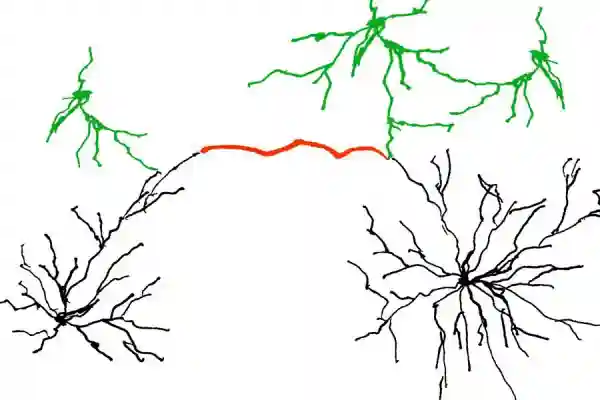
 Brain Model
Map 40 – Loss of Concentration
What happens in the brain when focus breaks and concentration lapses
Anatomically and biochemically
Loss of concentration is a precise neurobiological process, not a failure of discipline. The dorsolateral prefrontal cortex (dlPFC; focus holder and working memory) holds a task active as long as it has capacity. The thalamus filters irrelevant stimuli and forwards relevant ones. This system works efficiently – until either an overpowering distraction overcomes the thalamus filter, or dlPFC capacity drops through depletion.
The anterior cingulate cortex (ACC) is the distraction signaller: it registers when an incoming stimulus is potentially more significant than the current task. The locus coeruleus (LC) raises arousal when focus breaks. The task context – the working memory material the dlPFC had activated for the task – fades. On re-entry, the hippocampus must re-supply this material. This costs time and capacity.
Why does re-entry time after a distraction take so much longer than the distraction itself? Because the dlPFC must re-activate the full task-set. Focus breaks in seconds – re-entry takes minutes. Why does concentration capacity decrease over the course of the day? Because the dlPFC has a finite daily budget for executive control. Every focus break and every re-entry draws from it.
Examples from everyday life
- An e-mail notification during work: The distraction stimulus overcomes the thalamus filter. The ACC signals: potentially relevant. Focus breaks.
- Background noise: When the thalamus filter is loaded by many stimuli, more distraction stimuli pass through.
- Worse concentration in the afternoon: The dlPFC has consumed capacity through the day. Holding focus becomes more expensive.
- A break improves concentration: 20 minutes of rest measurably returns capacity to the dlPFC and lowers the LC arousal level.
- Deep work in blocks: No email, no interruption for 90 minutes: the dlPFC can enter deeply into the task context – without re-entry costs.
What this card does not say
This card describes a normal capacity mechanism in the healthy human brain. Loss of concentration is not a sign of insufficient discipline. This card is not a diagnostic tool and not a treatment guide.