 Brain Model
Map 46 – Myth: The Brain as Computer
Why the brain is not a computer – and what the analogy gets wrong
Anatomically and biochemically
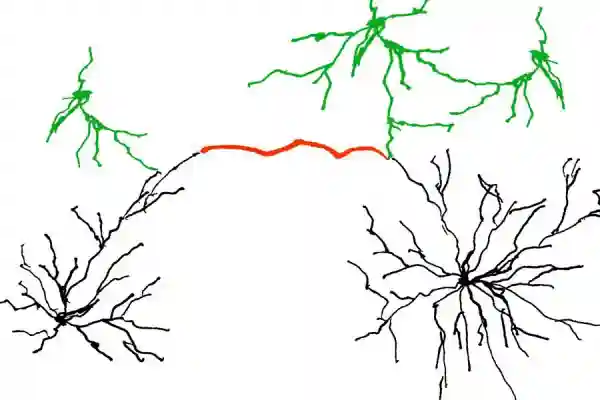
The brain-as-computer analogy was a useful teaching model of the 20th century. But it has fundamental limits. A digital computer processes binary signals (0/1) sequentially according to fixed programmes. The human brain does none of these things. Neurons fire in gradations (frequency modulation, not binary), in parallel and context-sensitively. There is no hard drive, no RAM, no sequential instruction execution, no unchangeable programming.
The brain is a biological system: it changes structurally through experience (neuroplasticity), it is chemically modulated by hormones and neurotransmitters, and it is embedded in a body with which it communicates continuously. The insula integrates body signals into decision processing. The amygdala modulates perception and cognition through emotional valence markings. No computer has an equivalent.
Why does the analogy cause harm? Because it creates unrealistic expectations: that the brain retrieves like storage reliably, that decisions are always rational and consistent, that emotions are disturbances of rational processing. All of this is neurobiologically false. The brain is not an information processing apparatus – it is an adaptive biological organism.
Examples from everyday life
- Memory is not like storage: Memories are reconstructed with every retrieval and can change. No computer storage works this way.
- Emotions are not a bug: The amygdala's emotional valence markings are integral components of decision processing, not disturbances.
- Computers do not know exhaustion: A computer runs until power fails. The brain depletes gradually through used capacity.
- Context changes everything: The same information is processed differently depending on context, bodily state and emotional state.
- Plasticity is not updates: The brain changes its structure through experience – not through external software updates.
What this card does not say
This card refutes the strong version of the computer analogy. For some pedagogical purposes the analogy remains a useful entry model. This card is not a diagnostic tool and not a treatment guide.