 Brain Model
Map 44 – Myth: Rational vs. Emotional Brain
Why the brain has no separate rational and emotional system – and what modern neuroscience shows
Anatomically and biochemically
The triune brain model by Paul MacLean (1969) described three evolutionary layers: the reptilian brain (brainstem), the mammalian brain (limbic system) and the human brain (neocortex). This model shaped the popular idea that a primitive emotional part and a modern rational part fight against each other. Neurobiologically, this model is outdated.
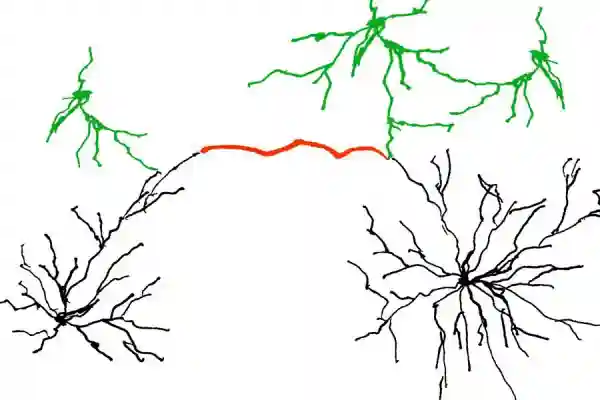
Modern imaging studies show: cortical and subcortical systems communicate permanently and bidirectionally. The amygdala sends signals to the prefrontal cortex – and receives signals from it. The insula processes body signals and integrates them into cognitive decision processing. Antonio Damasio's somatic marker hypothesis (1994) shows: emotional signals are necessary for rational decisions, not an obstacle. Patients with vmPFC damage who can no longer incorporate emotions into decisions make worse decisions – not better ones.
What did the model get right? That subcortical systems respond faster and are evolutionarily older. The speed gradient between the amygdala and the dlPFC is real. But these are not antagonists – they are complementary systems in an integrated network.
Examples from everyday life
- Emotions as decision aids: The gut feeling is the insula's signal of stored somatic markers. It is part of cognition, not its opposite.
- PFC and amygdala communicate bidirectionally: The PFC can dampen amygdala responses. The amygdala modulates prefrontal attention. Not conflict – cooperation.
- Emotional damage harms decisions: Damasio's observation: vmPFC damage does not make people more rational but incapable of deciding.
- No area is purely rational: The dlPFC processes working memory content – but with emotional valence from the amygdala.
- Cultural overvaluation of reason: The idea that emotions are disturbances of rational processes is a cultural – not neurobiological – judgement.
What this card does not say
This card refutes the triune brain model as a neurobiological description. It remains useful as a pedagogical model if its limits are acknowledged. This card is not a diagnostic tool and not a treatment guide.