 Brain Model
Map 25 – Double Bind
What happens in the brain when a situation makes contradictory demands – and every response is simultaneously right and wrong
Anatomically and biochemically
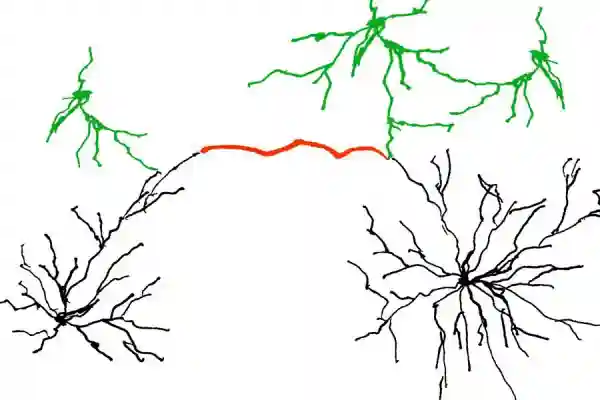
A double bind arises when a situation simultaneously makes two contradictory demands that mutually exclude each other – and when leaving the situation or naming the contradiction appears impossible or not permitted. The temporoparietal junction (TPJ) calculates both messages: the explicit and the implicit. Both demands are valid. No action option satisfies both simultaneously.
The anterior cingulate cortex (ACC) registers maximum contradiction and keeps the search for a solution open – with no prospect of one. The amygdala marks both possible responses as threatening: one wrong response is a threat, and so is the other. The insula delivers the paradoxical physical signal: a tension that does not discharge, because there is no direction for discharge.
Why is the double bind so exhausting? Because the system repeatedly runs a calculation that has no solution. Every round costs dlPFC capacity without generating progress. Why does naming the contradiction help? Because it lifts the situation to a meta level – out of the double-bind space. The vmPFC can address the paradox instead of calculating within it.
Examples from everyday life
- Be spontaneous!: This command is unfulfillable: spontaneity on command is not spontaneity. Every response is wrong.
- I need your opinion – but not like that: Expressing an opinion is wrong, not expressing one is wrong. The ACC registers no exit.
- Professionalism and authenticity simultaneously: In some work cultures they contradict each other situationally. The system calculates without a solution.
- Communicative resolution: "I notice that I cannot respond correctly here, whatever I do." This names the paradox – and exits the double-bind space.
- Children in loyalty conflicts: When a child receives contradictory demands from two parents without being able to leave the situation.
What this card does not say
This card describes the approach-avoidance mechanism of the double bind as a neurobiologically understandable pattern. Gregory Bateson's original double-bind concept (1956) came from schizophrenia research and is now used more broadly. This card is not a diagnostic tool and not a treatment guide.