 Brain Model
Map 18 – Comparison with Others
Why the brain constantly measures itself against others – and what happens in the reward system and amygdala in the process
Anatomically and biochemically
Social comparison is an automatic process. The brain continuously calculates how one's own position compares to others – in resources, recognition, success. The ventral striatum (part of the mesolimbic reward system) maintains an implicit comparison calculation: what do I have relative to comparable others? When the other person has more, the striatum registers a relative deficit – dopamine drops. The phenomenon of feeling worse when others have more, even though one's own situation has not changed, is neurobiologically precise.
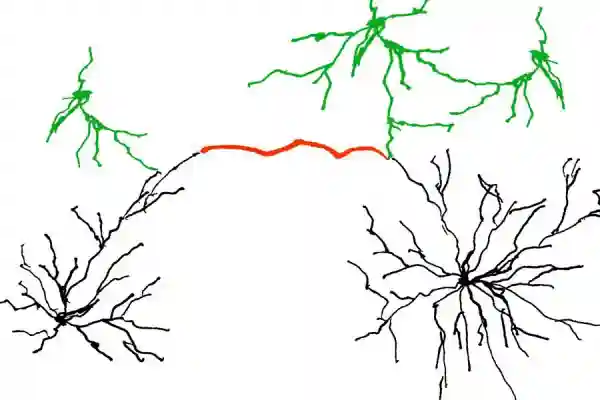
The temporoparietal junction (TPJ; also: other-model area, Theory-of-Mind region) models the other person: what do they have, what can they do, where do they stand? The medial prefrontal cortex (mPFC) relates the result to the self-image. The anterior cingulate cortex (ACC) registers the discrepancy. The amygdala rates perceived social inferiority as a threat – evolutionarily a reliable signal: falling behind in the group carried real risk in ancestral environments.
Why does upward social comparison make people unhappy even when their absolute situation is good? Because the striatum calculates relative outcomes, not absolute ones. A brain that knows others are better off registers this as a resource deficit – regardless of one's own absolute well-being. Why are social media so comparison-stimulating? Because they provide a high-density supply of social comparison stimuli: every piece of information about others activates TPJ and striatum. The brain compares automatically, even when one would rather not. What interrupts comparison mode? Not stopping the comparison, but shifting the reference frame through the vmPFC: which criterion actually matters for my life?
Examples from everyday life
- Social media: Every image of others' success activates striatum and TPJ. The dopamine gradient arises automatically – before any conscious comparison has taken place.
- A colleague gets a promotion: The striatum registers a relative deficit. The amygdala marks the situation as a social threat. One's own objective status has not changed.
- A class reunion: Intense comparison stimulus: many reference points from one's own past, many TPJ calculations in a short time. The system runs at full speed.
- Upward comparison and motivation: Sometimes an upward comparison activates the dlPFC constructively: if that person achieved it, I can learn how. This requires the amygdala not to rate the comparison as a threat.
- Downward comparison: Comparisons downward briefly lift mood – the striatum registers a relative advantage. Long-term, this mode is ethically and socially costly.
What this card does not say
This card describes a normal mechanism in the healthy human brain. Social comparison is deeply evolutionarily anchored. This card is not a diagnostic tool and not a treatment guide.