 Brain Model
Map 28 – If-Then Loops
Why the brain constructs conditional scenarios instead of acting in the present – and how these loops tax the decision system
Anatomically and biochemically
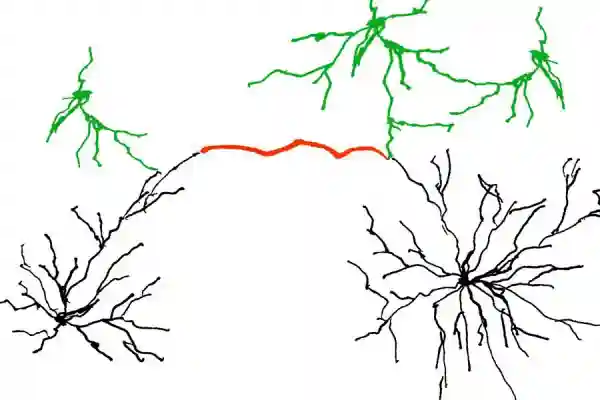
If-then loops are a planning tool of the dorsolateral prefrontal cortex (dlPFC). The dlPFC constructs if-scenarios, the orbitofrontal cortex (OFC; responsible for option evaluation and expectation comparison) evaluates the then-outcome. The hippocampus supplies episodic material: similar situations from the past make the constructed scenarios more vivid and emotionally concrete. This mechanism is valuable for short-term planning. It becomes a problem when the if-condition lies outside one's control or when the if never arrives.
The amygdala marks threatening if-scenarios as significant – and thereby as priority for attention. The anterior cingulate cortex (ACC) registers the open loop and keeps attention directed there until a solution is found. When the if is outside one's control – a diagnosis, a conversation outcome, someone else's decision – there is no closing solution. The system remains in the loop.
Why are if-then loops so hard to interrupt? Because the dlPFC, when suppressing the loop, uses the same resources it spent running the loop. More willpower into interruption only depletes faster. Why does a concrete plan calm if-then loops so reliably? Because a plan gives the ACC an action option. The loop is no longer open – it has a provisional close. The hippocampus then supplies material for the concrete action scenario rather than the uncontrollable if-scenario.
Examples from everyday life
- Work and its outcome: If the project does not work, then... The dlPFC constructs cascades. Each cascade is filled with episodic memory material by the hippocampus.
- A relationship: If she or he says that, then... The amygdala marks the scenario and keeps attention on it until the conversation has taken place.
- Health: If the result shows X, then... The OFC simulates both branches with emotional valence. The loop runs until the if is closed by information.
- A concrete plan breaks the loop: What do I do today? – gives the ACC an action option and closes the loop provisionally.
- Evening hours: If-then loops are particularly active in the evening because the DMN is active and the dlPFC, without a task, constructs scenarios.
What this card does not say
This card describes a normal mechanism in the healthy human brain. If-then thinking is a planning tool that can become a sustained loop under conditions of uncertainty. This card is not a diagnostic tool and not a treatment guide.