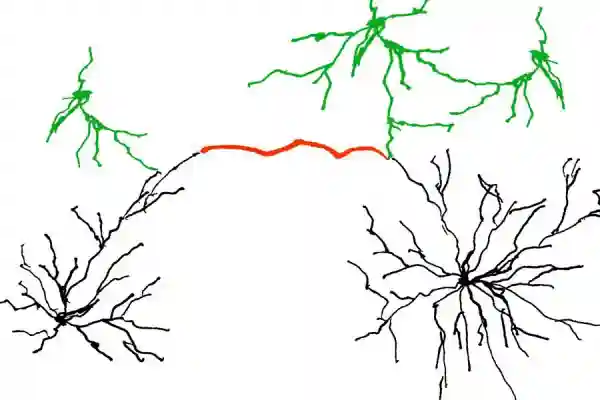
 Brain Model
The Emotion Behind Procrastination – Why Avoidance Feels Like Relief
Putting something off rarely feels like a decision. It feels like a reduction in discomfort. That is not a coincidence or a rationalisation – it is a description of what the brain is actually doing. Procrastination is, at its core, a short-term mood-repair mechanism, and the mood it is repairing is the aversive feeling that the task itself generates.

Anatomically and biochemically
The sequence begins not with a decision but with a feeling. When the stored representation of a task is retrieved – the meeting that needs preparing, the message that needs answering, the document that needs starting – the amygdala evaluates its emotional valence. For a task associated with past frustration, potential criticism, uncertainty about the outcome, or simple tedium, the amygdala returns an aversion signal. This signal is not yet a feeling; it is an electrical and chemical output from the limbic system toward the cortex.
The anterior insula is what turns that output into a feeling. The insula functions as the brain's interoceptive organ – it integrates internal body states into conscious experience. When the amygdala's aversion signal reaches the insula, it produces the characteristic bodily experience of dread: a heaviness in the chest, a tightening in the stomach, a vague pulling-away from the task. This is not metaphorical. It is the insula making the amygdala's assessment felt in the body. The task has not yet been touched. The discomfort is already present.
Avoidance resolves this discomfort immediately. The moment attention moves away from the task – to a different application, a different conversation, a different physical activity – the insula's aversion signal drops. The nucleus accumbens (NAcc) receives a brief dopamine signal: a small reward for the removal of the unpleasant state. This is short-term mood repair in the literal neurochemical sense. The person did not choose to feel better. The circuit produced relief as a consequence of avoidance, automatically.
What makes this a self-sustaining loop is the reinforcement mechanism. According to Hebbian synaptic potentiation – the principle that co-activated neurons strengthen their connections with repetition – the association between the task representation and the avoidance response becomes more automatic with each cycle. The amygdala's aversion signal for this task grows stronger with each postponement, because each postponement pairs the task representation with avoidance rather than completion. The hippocampus, which stores contextual associations, encodes this pairing: task equals discomfort; avoidance equals relief. Over time, the avoidance can trigger before the task is even opened, on the mere anticipation of encountering it.
The anterior cingulate cortex (ACC) monitors the open task and registers the discrepancy between intention and action as an error signal. This signal is experienced as guilt, low-grade unease, or a persistent background tension. Importantly, the ACC's error signal does not resolve itself through self-criticism – the self-critical inner dialogue that often accompanies procrastination adds an additional aversive load without generating a revised action plan. The result is a secondary emotional weight on top of the original task aversion: the person now carries both the aversion to the task and the guilt about not having done it yet.
Understanding procrastination as emotional regulation rather than laziness or poor time management changes the useful question. The question is not "why don't you just do it" but rather "what does this task feel like, and what would lower that feeling enough to begin?" The Mind Rooms e-book addresses this at the working-memory level: assigning the aversive task its own spatial container separates the feeling from the next action, which is the circuit-level condition for beginning.
Everyday examples
- The head of department and the quarterly review: The document is already open. A familiar insula signal appears – not fear, not panic, just a dull background pull away from the screen. Three minutes later the inbox is open instead. The avoidance was not a choice; it followed the feeling automatically.
- The consultant who prepares to prepare: Before starting client work, the desk gets tidied, the coffee gets made, the inbox gets checked. Each small substitution delivers a brief relief from the insula's aversion signal. The work does not get started; the circuit gets temporarily satisfied.
- The task that shows up at 11 p.m.: The postponed report is not being worked on. But the ACC's error signal is running. It surfaces as background tension during dinner, as a thought before sleep, as a mild unease that does not belong to the present moment. The avoided task has not disappeared – it has moved into persistent background activation.
What this page does not say
This page describes a normal mechanism in the healthy human brain. Identifying the emotional regulation function of procrastination does not by itself resolve it – recognition alone does not change the circuit's response. This page does not offer a method for stopping procrastination, and it does not diagnose any emotional disorder. The insula's aversion signal and the NAcc's relief response both operate in every healthy brain; what varies is the strength and breadth of the aversion, not whether the mechanism exists. If avoidance is persistent, severe, and accompanied by other signs, please consult a licensed professional.
Frequently asked questions
What emotion is commonly linked to procrastination?
The most reliably documented emotion is task-specific aversion: the uncomfortable anticipation of starting something associated with boredom, fear of failure, frustration, or resentment. The anterior insula makes this anticipatory feeling physically real as bodily discomfort. Avoidance relieves that discomfort immediately. The emotion does not need to be dramatic – a mild, background dread is sufficient to drive the avoidance cycle.
Is procrastination an emotional problem?
In the precise anatomical sense, yes: the mechanism begins with an emotion – the insula's interoceptive signal of aversion – and avoidance functions as short-term emotional regulation. This does not make procrastination a disorder. Emotional regulation is a normal brain function. The difficulty arises when the immediate-relief loop is reinforced repeatedly until avoidance becomes the automatic response to a specific task or task category.
Search interest in this topic
Global monthly search volume – "what emotion is linked to procrastination": {{AHREFS_VOLUME}}
Global monthly search volume – "is procrastination an emotional problem": {{AHREFS_VOLUME_2}}
Co-occurring terms in top-ranking content: {{COOCCURRENCE_TERMS}}
These are estimates of observed search behaviour, not clinical prevalence data.