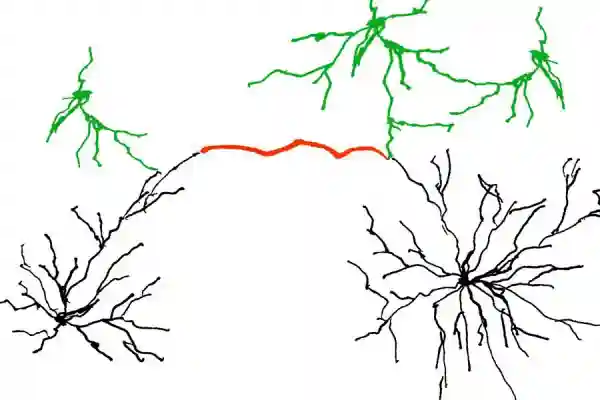
 Brain Model
Why Rational Arguments Often Do Not Help With Performance Anxiety – The Subcortical Explanation
The person standing backstage knows the material. They know the audience is not dangerous. They know they have done this before and it went well. They know that the anxiety is disproportionate to the actual risk. And yet the cortisol is rising, the hands are cold, and the voice is at risk of breaking. Knowing has not helped. This is not a failure of rationality or self-discipline. It is the predictable consequence of addressing a subcortical process with a cortical tool.

Anatomically and biochemically
The amygdala's threat evaluation is subcortical, rapid, and pre-conscious. Sensory and associative input from the thalamus and hippocampus reaches the amygdala within milliseconds of the relevant stimulus – well before conscious cortical processing has assembled a coherent representation of the situation. The HPA cascade begins before the person has completed a thought about what is happening. A rational argument, to be applicable, must be consciously formed and consciously applied. It arrives late, from a different system, addressed to a process that has already produced its output. This is the basic asymmetry: the amygdala communicates downward and outward to the body with speed; the cortex communicates back to the amygdala with effort and latency.
The prefrontal-to-amygdala inhibitory pathway does exist. The medial prefrontal cortex (mPFC) and the ventromedial prefrontal cortex (vmPFC) project inhibitory signals to the amygdala and can reduce its activation under conditions of low stress and sufficient prefrontal resources. This is the basis of cognitive reappraisal techniques that work. The critical word is "can." Under the cortisol and noradrenaline already produced by the performance anxiety circuit, the dorsolateral prefrontal cortex (dlPFC) is partially suppressed. The inhibitory pathway the cortex would use to dampen the amygdala is partially blocked by the amygdala's own output. The system that is supposed to apply the rational argument is weakened by the same activation it is trying to address.
There is an additional reason that rational arguments fail specifically: they are addressed to the wrong representation. The amygdala does not process logical propositions. It processes stored associative representations of situations, retrieved and predicted by the hippocampus. When a speaker tells themselves "the audience means me no harm," this proposition is processed cortically. The amygdala is responding to a different input: the stored representation of what social evaluation has meant in the speaker's history, the predicted physiological state of standing in front of observers, and the hippocampal forward simulation of how the next minutes will unfold. Updating a cortical belief about the audience does not update the amygdala's associative representation of the evaluation situation.
What reaches the amygdala effectively is not a verbal argument but a change in what it is evaluating. Cognitive reappraisal works – when it works – because it changes the input to the amygdala's evaluation, not just the cortex's commentary on that evaluation. Relabelling the activation as readiness changes the category of the situation from threat to challenge, which the amygdala processes as a different input and responds to differently. Structured preparation works not by providing factual reassurance but by building a stored representation – in hippocampal long-term memory – that retrieval has functioned in comparable situations before. This counter-evidence is in the right format for the amygdala to use. The Myth: Will Over Matter map addresses the adjacent failure of effort-based override directly, and Rational Arguing Against Feelings covers the broader pattern. For ongoing application of these distinctions in professional contexts, the community at skool.com/supervision offers structured discussion grounded in the maps.
This asymmetry has a specific implication for coaching and supervision. Understanding the mechanism of performance anxiety does not reduce performance anxiety in the moment of the performance. Knowledge of the circuit is a cortical resource. The amygdala's activation is not diminished by the speaker knowing that cortisol is throttling their dlPFC. What changes with understanding is the relationship to the experience – which can reduce the secondary cortisol response generated by the ACC's alarm at the anxiety itself. Insight dampens the self-referential amplification of the loop. It does not stop the loop.
Everyday examples
- The therapist who cannot apply their own tools before a public lecture: They know exactly what is happening neurobiologically. The amygdala does not register that knowledge as relevant input. The cortisol rises on schedule. Understanding why this happens is itself slightly reassuring – one fewer loop in the ACC's alarm system – but does not prevent the HPA activation.
- The manager told to "just relax" before a board presentation: "Just relax" is a cortical instruction to a subcortical process. It adds a layer of self-criticism when it fails, which generates its own secondary stress response. The instruction is anatomically incoherent with the process it is addressed to.
- The experienced speaker who tries positive affirmations and finds them ineffective: Affirmations are cortically processed verbal content. They do not update the amygdala's associative representation of the evaluation situation. They may have modest effects through cortical belief revision, but they do not address the primary subcortical driver. An affirmation is not the wrong idea; it is the wrong format for the system it needs to reach.
- The presenter who finds that concrete preparation calms them where pep talks do not: Preparation builds hippocampal memory traces that function as evidence – in the format the amygdala can use – that retrieval will work. This is not the same as rational reassurance. It is updating the stored representation, not the conscious belief.
What this page does not say
This page does not say that rational understanding, cognitive techniques, or coaching are useless for performance anxiety. It says that the mechanism by which they are useful is different from simple rational override of the amygdala's output. Cognitive reappraisal, preparation, and structured working-memory approaches can be effective – but they work by changing the amygdala's inputs or by modifying the secondary loops that amplify the primary response, not by cortically suppressing the initial subcortical threat evaluation. Understanding this distinction increases the precision of any approach, whether self-managed or professionally supported.
Frequently asked questions
Why doesn't telling yourself to calm down help with performance anxiety?
"Calm down" is a cortical instruction addressed to a subcortical process. The amygdala's threat response is initiated before conscious thought has formed and operates independently of rational evaluation. The prefrontal-to-amygdala inhibitory pathway exists but requires sustained effort and is partially suppressed by the cortisol the amygdala has already produced. Asking the cortex to override the amygdala with a verbal instruction is asking a slower, weakened system to stop a faster, already-active one.
Why doesn't knowing that performance anxiety is irrational make it go away?
Knowledge is processed in the prefrontal cortex. The amygdala's threat evaluation operates on stored associative representations, not on logical propositions. Knowing that the audience is not actually dangerous does not update the amygdala's threat estimate, because the amygdala does not receive logical arguments as input. It receives sensory data, stored associations, and hippocampal predictions. A rational argument that the situation is safe is processed in a different system from the one generating the anxiety.
Why can't I think my way out of performance anxiety?
Thinking is a prefrontal operation. Performance anxiety is primarily a limbic one. The prefrontal-to-amygdala inhibitory signal is weaker and slower than the amygdala's output to the HPA axis. Under the cortisol already produced, prefrontal function is partially suppressed – making the one tool the person is reaching for less available precisely when they most need it. What reaches the amygdala most effectively is not a logical argument but a change in how the situation is evaluated.
What approaches do work on performance anxiety if rational arguments don't?
Approaches that change the amygdala's input rather than overriding its output. Cognitive reappraisal – relabelling the activation as readiness – changes the evaluation category the amygdala is working with. Preparation builds hippocampal counter-evidence in a format the amygdala can use. Structured working-memory methods reduce the open-ended uncertainty that is sustaining the amygdala's threat estimate at source.
Can the failure of rational arguments to help point to a strength?
The Competence Hyperdominance framework reads this persistence as a feature of high social calibration. A brain with strong social sensitivity does not simply override its concern about the group's response when told rationally that the concern is disproportionate. The competence is running; it is not listening to the argument because the argument is addressed to the wrong system. This is not a weakness of intelligence. It is the competence protecting its function.
Search interest in this topic
Global monthly search volume – "why doesn't telling yourself to calm down work": {{AHREFS_VOLUME}}
Global monthly search volume – "why does knowing about anxiety not help": {{AHREFS_VOLUME_2}}
Global monthly search volume – "why can't I think my way out of anxiety": {{AHREFS_VOLUME_3}}
Co-occurring terms in top-ranking content: {{COOCCURRENCE_TERMS}}
These are estimates of observed search behaviour, not clinical prevalence data.